Climate Change
Zero emissions in our operations by 2040
5.3% decrease in Scope 1 and 2 emissions vs 2024
4.3% decrease vs 2024 in Mexico
13.2% decrease vs 2024 in Central America
Power 100% of our operations with renewable energy by 2035
55.0% estimated percentage of our electricity is supplied by renewable sources
51.6% in Mexico
77.9% in Central America
Circular Economy
“Zero waste” to landfill and incineration in our operations in Mexico by 2025
82.9% of waste materials diverted from landfill and incineration in Mexico.
20% Private Brands plastic packaging made from post-consumer recycled content by 2025
12.1% of our plastic packaging made from post-consumer recycled content in Mexico and
5.3% in Central America.
Reduce operational food loss and waste 50% by 2030 (vs 2016 baseline)
68.3% food loss and waste reduction in Mexico and
32.1% in Central America
Natural Capital
100% of palm oil in Private Brands products sourced with no deforestation or conversion by 2025
35.8% of palm oil is certified as sustainable in Mexico and
61.1% in Central America
100% of Private Brands products made of pulp, paper, and timber will be sourced deforestation-free and conversion-free by 2025
98.7% of pulp, paper and timber is sustainably sourced in Mexico and
99.6% in Central America
By 2025, our fresh, frozen, farmed and wild-caught seafood suppliers will source from fisheries that are third-party certified as sustainable, actively working toward certification or engaged in a fishery improvement project (FIP) or Aquaculture Improvement Project (AIP)
78.4% of fresh and frozen fish and seafood are certified as sustainable in Mexico and
75.2% in Central America
Circular Economy
We continue to strengthen our commitment to a circular economy by designing operations that minimize waste, extend the lifecycle of materials, and promote responsible consumption.
In 2025, our efforts focused on four strategic areas: zero waste, sustainable packaging, reducing food waste, and encouraging customers to recycle. These initiatives are part of a broader vision to reduce environmental impact, optimize resource use, and contribute to a regenerative business model that creates long-term value for our customers, suppliers, and communities.
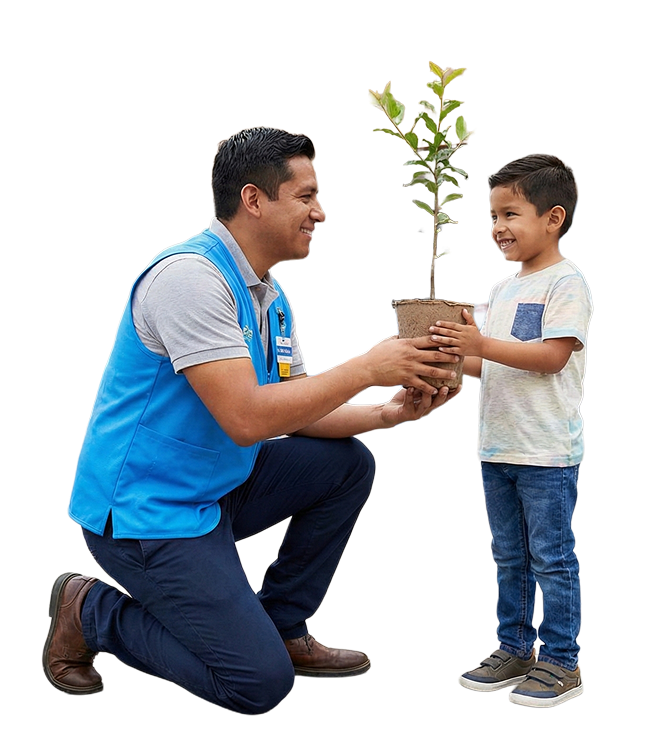
Regeneration of Natural Resources
Many of the products we sell, ranging from produce and seafood to textiles and personal care, are sourced from nature or rely on nature-derived ingredients.
Communities also depend on natural ecosystems for vital services such as climate regulation, fresh water, flood protection, soil health, pollination, and energy. However, these landscapes and seascapes are increasingly under pressure from land conversion, climate change, and pollution.
To address these challenges, we have identified key strategic areas that guide our actions:

Sustainable sourcing

Water footprint